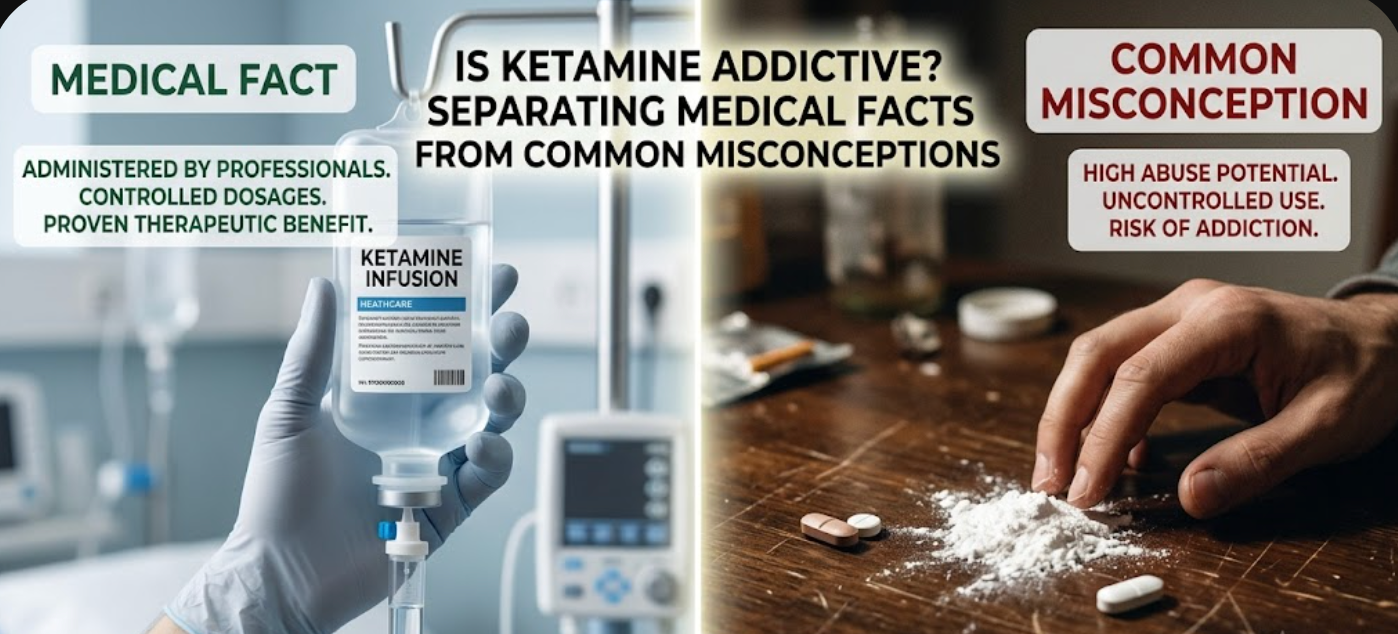
Unveiling the Truth: Is Ketamine Safe and Non-Addictive?

Introduction:
In recent years, ketamine has gained attention not only as an anesthetic in medical settings but also for its potential in treating mental health conditions such as depression and anxiety. However, questions linger about its safety and the risk of addiction. Let's delve into the facts and myths surrounding ketamine use to understand whether it deserves its reputation as a safe and non-addictive substance.
Understanding Ketamine:
Ketamine is a dissociative anesthetic that has been used for decades in medical settings for surgical procedures and pain management. It works by blocking NMDA receptors in the brain, leading to a dissociative state where perception of sight and sound is altered. In recent years, it has gained attention for its off-label use in treating certain mental health conditions, often administered in lower doses than those used for anesthesia.
The Safety Question:
- Medical Use: Ketamine has a well-established safety profile when used in controlled medical environments. Its use is closely monitored by healthcare professionals to mitigate potential risks. In anesthesia and pain management, ketamine is recognized as a safe and effective option.
- Psychiatric Use: In psychiatric applications, particularly for treatment-resistant depression, ketamine is administered in lower doses than those used in anesthesia. Research suggests that under proper supervision, these doses are generally well-tolerated, with minimal adverse effects.
- Short-Term Side Effects: Like any medication, ketamine can cause short-term side effects, including nausea, elevated blood pressure, and vivid dreams. However, these effects are typically temporary and subside once the drug leaves the system.
The Addiction Concern:
- Potential for Abuse: While ketamine does have a potential for abuse, especially in recreational settings, the risk of addiction is considered lower compared to other substances. Ketamine does not interact with the brain's reward system in the same way as highly addictive drugs, reducing its potential for creating a compulsive pattern of use.
- Limited Evidence of Physical Dependence: Unlike substances with a high risk of physical dependence, there is limited evidence to suggest that ketamine leads to a physical craving for the drug. However, psychological dependence may still occur in some individuals, particularly those with a history of substance abuse.
Conclusion:
In conclusion, when used responsibly and under medical supervision, ketamine appears to be a relatively safe and non-addictive substance. Its potential benefits in mental health treatment should not be overshadowed by fears of misuse. However, it is crucial to emphasize that recreational use, unmonitored self-administration, or use in unsupervised settings can significantly increase the risk of adverse effects and potential addiction.
As with any medication or treatment, it is essential to consult with healthcare professionals to assess individual risk factors and determine the most appropriate course of action. The responsible use of ketamine in medical and psychiatric settings may pave the way for innovative approaches to mental health treatment.