Why Ketamine Works When Other Treatments Fail: Understanding Neuroplasticity in Depression and PTSD

When Nothing Else Seems to Work
If you’re reading this, there’s a good chance you’ve already tried multiple treatments for depression or PTSD—and didn’t get the results you were hoping for.
You may have gone through:
- Several antidepressant medications
- Months or years of therapy
- Periods of improvement followed by relapse
At a certain point, the question shifts from “What should I try next?” to “Why isn’t anything working?”
This experience is often referred to as treatment-resistant depression, and it’s more common than many people realize.
Ketamine takes a different approach.
Why Traditional Treatments Don’t Always Work
Most antidepressants—like SSRIs and SNRIs—focus on adjusting levels of neurotransmitters such as serotonin, dopamine, and norepinephrine.
For some people, this is enough. For others, it isn’t.
That’s because depression and PTSD are not just chemical imbalances. They also involve patterns of brain activity that become rigid over time.
These patterns can include persistent negative thinking, emotional shutdown, heightened stress responses, and difficulty shifting perspective.
A Different Mechanism: Beyond Serotonin
Ketamine works through the glutamate system, which plays a central role in learning, memory, and neural communication.
Rather than gradually adjusting chemistry, ketamine creates conditions for the brain to become more flexible and adaptive.
What Is Neuroplasticity?
Neuroplasticity is the brain’s ability to form new connections, strengthen or weaken pathways, and adapt based on new experiences.
In depression and PTSD, neuroplasticity is often reduced. The brain becomes efficient at repeating the same patterns like rumination and avoidance.
Ketamine helps temporarily increase neuroplasticity, creating an opportunity to shift those patterns.
How Ketamine Works in the Brain
Ketamine increases glutamate activity, promotes synaptic growth, reconnects key brain regions, and creates a temporary window where the brain is more open to change.
How Quickly Does Ketamine Work?
One of the biggest differences is speed. Antidepressants often take 4–6 weeks, while ketamine may produce noticeable changes within hours to days.
What Does Ketamine Treatment Feel Like?
Patients may experience a sense of detachment from usual thought patterns, changes in perception, and a more reflective internal state.
Many report gaining new perspective, feeling less stuck, and accessing emotions in a more manageable way.
Why This Matters for Depression
Depression often involves persistent negative thought loops and reduced flexibility. Ketamine can interrupt these patterns and create mental space.
Why This Matters for PTSD
PTSD involves a nervous system stuck in threat response. Ketamine may reduce fear circuit overactivation and allow safer emotional processing.
Is Ketamine Safe?
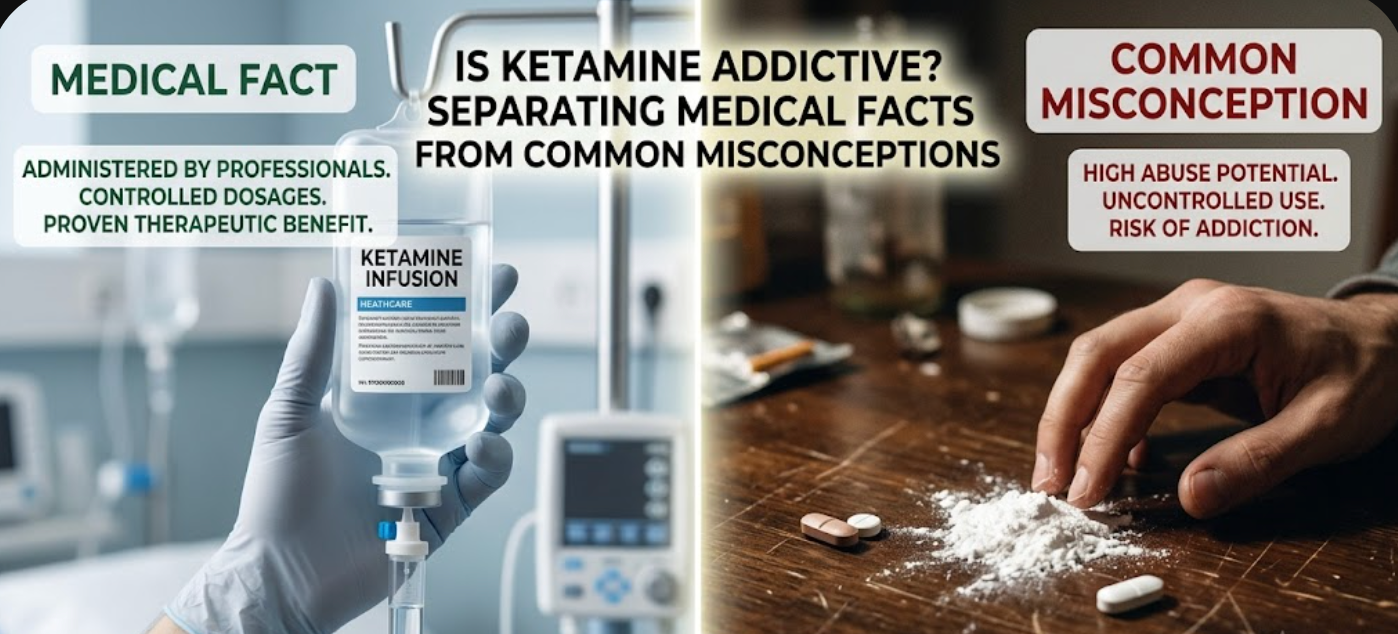
When administered in a controlled medical setting, ketamine is considered safe with proper screening, monitoring, and dosing.
It is important to distinguish between medical ketamine therapy and unsupervised use.
The Role of Integration
Ketamine creates the conditions for change, but integration determines long-term benefit. Support during this window helps translate insight into progress.
Who May Benefit From Ketamine Therapy?
Ketamine therapy may be appropriate for individuals who have not responded to traditional treatments, feel stuck in persistent patterns, or are dealing with unresolved trauma.
Next Step
If you want to learn more about whether ketamine therapy is appropriate for your situation, you can schedule a consultation or call the clinic directly for more information.