Is Ketamine Addictive? Separating Medical Facts from Common Misconceptions
If you've been researching ketamine therapy, you've probably encountered two very different stories.
One describes ketamine as one of the most promising advances in mental health treatment in decades. The other focuses on recreational misuse, addiction, and alarming headlines.
It's understandable to wonder: “If ketamine can be abused recreationally, how can it also be used as a treatment for depression, anxiety, or PTSD?”
The answer lies in understanding the difference between recreational ketamine use and medically supervised ketamine therapy.
They're not the same experience, they're not used for the same purpose, and they don't carry the same level of risk.
Can Ketamine Be Addictive?
The honest answer is yes—but context matters. Ketamine has the potential to be misused, which is why it is a Schedule III controlled substance. However, medical supervision, careful screening, and structured treatment are fundamentally different from recreational use.
The more important question is whether medically supervised ketamine therapy carries the same risk as recreational use. Current evidence suggests these are very different situations.
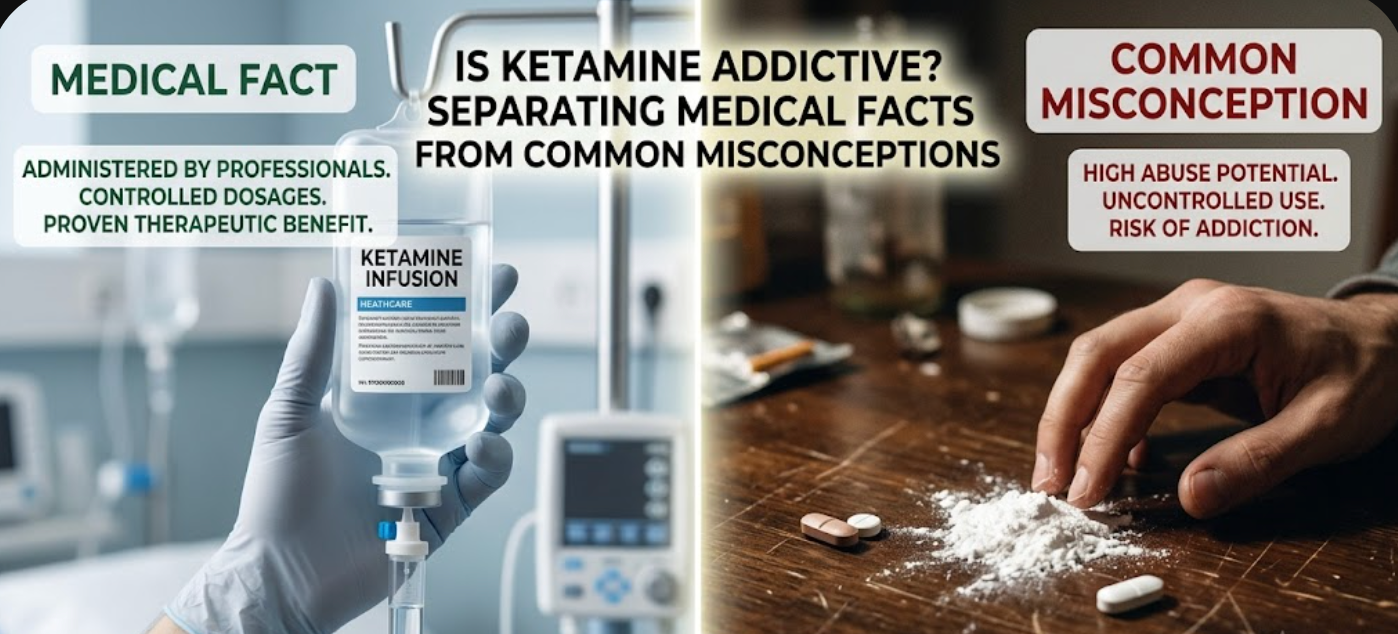
Recreational Ketamine vs. Medical Ketamine Therapy
Recreational use often involves unknown doses, frequent use, mixing substances, and no medical oversight. Clinical ketamine therapy begins with medical evaluation, individualized dosing, monitoring, and a defined therapeutic goal.
Rather than pursuing intoxication, treatment aims to support neuroplasticity, emotional processing, and psychological healing.
Why Frequency Matters
Patterns of use strongly influence misuse risk. Medical treatment follows an initial treatment series with maintenance only when clinically appropriate. The objective is lasting improvement—not dependence.
What Does the Research Tell Us?
Studies of ketamine for depression have generally not shown addiction developing in patients treated within structured medical programs. Appropriate patient selection and ongoing monitoring are key parts of maintaining safety.
Who May Need Additional Caution?
Some individuals require additional evaluation before treatment.
- Active substance use disorders
- Poorly controlled psychotic disorders
- Certain cardiovascular conditions
- Other medical conditions that increase treatment risk
A history of addiction does not automatically exclude someone from treatment. Ketamine is also being studied for some substance use disorders, making individualized assessment especially important.
Why Therapy Makes a Difference
Recreational use often focuses on escape. Ketamine-assisted psychotherapy focuses on insight, emotional processing, and integration. The medication creates an opportunity; therapy helps turn that opportunity into lasting change.
A More Helpful Question
Instead of asking, "Is ketamine addictive?", ask: "Is this treatment being provided within a safe, thoughtful, medically supervised program?" That question tells you far more about your actual level of risk.
A Final Word
Every effective treatment carries both benefits and risks. When used recreationally, ketamine can be harmful. When used responsibly within a structured medical program, it has helped many people who have not responded to traditional treatments.
Explore Ketamine Therapy at Ayafusion
Ayafusion provides medically supervised ketamine therapy with a focus on careful screening, patient safety, and collaboration with mental health professionals.
Ayafusion offers ketamine therapy for depression, anxiety, and PTSD in Downers Grove and the greater Chicago area.
Many clients searching for ketamine therapy near Chicago, ketamine-assisted psychotherapy in Illinois, or safe ketamine treatment for depression find us through referrals and educational resources like this.